Learn how to choose the perfect cargo van camper for your adventures. Tips on size, features, and what to look for before buying your van.
Why Cargo Van Campers Are Taking Over the Camping Scene
Drive through any campground these days and you will see them everywhere. Those sleek white vans parked next to traditional RVs and motorhomes. People cooking breakfast outside their sliding doors. Maybe a surfboard strapped to the roof or bikes hanging off the back. The cargo van camper lifestyle has exploded in popularity, and for good reason.
These converted vans offer something special that sits right between tent camping and driving a full-sized RV. You get the freedom to sleep in your vehicle, cook your own meals, and travel wherever the road takes you, all while driving something that fits in a normal parking spot. No special license needed. No worrying about low-clearance bridges. Just you, your van, and the open road.
But here is the thing. Choosing your first cargo van camper can feel overwhelming. There are so many options, so many things to consider, and everyone online seems to have a different opinion about what makes the perfect setup. Do not worry. We are going to break it all down so you can make a smart choice that fits your actual needs and budget.
Understanding What Makes a Cargo Van Different
Before we get into the details, let us clear up what we mean by a cargo van camper. We are talking about actual cargo vans that have been converted into camping vehicles. These are different from passenger vans or minivans, though people camp in those too.
Cargo vans start life as work vehicles. Think delivery vans, plumber vans, or contractor trucks. They have big empty spaces in the back with metal walls and floors. Then someone (maybe the manufacturer, maybe a conversion company, maybe the previous owner) transforms that empty box into a little home on wheels.
The beauty of a cargo van camper is that it looks pretty normal from the outside. You can park it on a city street without drawing much attention. But inside? That is where the magic happens. Bed, kitchen, storage, maybe even a little bathroom. All packed into a space smaller than most walk-in closets.
Size Matters: Picking the Right Van Length
Cargo vans come in different sizes, and this is one of the first big decisions you need to make. The most common lengths are short wheelbase, medium wheelbase, and long wheelbase. Some vans even come in extended versions that are extra long.
Short Wheelbase Vans
These are the compact option, usually around 130 to 135 inches in wheelbase length. They are easier to drive, easier to park, and get better gas mileage. But here is the catch. You have less living space inside. If you are a solo camper or maybe camping with one other person and you do not mind cozy quarters, a short van works great. You can fit a bed, some storage, and a basic kitchen setup.
The downside? You probably will not have room for a bathroom, and standing up inside might be tight unless you get a high roof model.
Medium and Long Wheelbase Vans
Step up to a medium or long wheelbase van and you gain precious inches that translate to real living space. We are talking 144 to 170 inches of wheelbase. This extra length means you can have a bigger bed, more storage, a proper kitchen area, and maybe even a wet bath (a small combo shower and toilet situation).
Long vans still drive like regular vehicles. Sure, you need to be a bit more careful in tight parking lots, but it is nothing like maneuvering a 30-foot motorhome. Most people get comfortable driving a long van within a few days.
The Sweet Spot
For most beginners, a long wheelbase van with a high roof offers the best balance. You get enough space to actually live in the van comfortably, you can stand up inside, and it is still manageable to drive. If you plan to spend weeks or months traveling, that extra space stops feeling like a luxury and starts feeling necessary.
Roof Height: How Much Headroom Do You Need?
This is huge, and a lot of first-time buyers do not think about it enough. Roof height changes everything about how livable your cargo van camper feels.
Low Roof Vans
A low roof van has a standard roof height, usually around 55 to 60 inches inside. Unless you are pretty short, you cannot stand up in these. You will be crouching, sitting, or lying down whenever you are in the back.
Some people love low roof vans because they get better gas mileage, fit in more parking garages, and feel less top-heavy in wind. But living in one? It gets old fast. Changing clothes while hunched over. Making coffee bent at the waist. It is doable for weekend trips, but tough for longer adventures.
Medium Roof Vans
Medium roof vans give you a bit more headroom, usually 65 to 72 inches. Depending on your height, you might be able to stand up straight or at least come close. This middle option works well for people who want better fuel economy than a high roof but more comfort than a low roof.
High Roof Vans
Now we are talking. A high roof van typically has 76 to 80 inches of interior height. Most people can stand up fully, walk around, and generally feel like they are in an actual room instead of a cave. If you plan to cook inside, work on a laptop, or spend rainy days hanging out in your van, a high roof makes life so much better.
The trade-off? High roof vans cost more to buy, use more fuel, and catch more wind on the highway. But ask anyone who camps regularly in their van, and most will tell you the high roof is worth every penny.
New Versus Used: What Makes Sense for Beginners
Let us talk money. A brand new cargo van camper with a professional conversion can cost anywhere from $60,000 to over $150,000. That is a lot of camping trips. But you can also find used options for $20,000 to $40,000, or even buy an empty cargo van and convert it yourself over time.
Buying New
A new van with a fresh conversion gives you peace of mind. Everything works. You get a warranty. You know the history. Plus, newer vans have better fuel economy, safety features, and technology than older models.
If you have the budget and you want something reliable right away, buying new makes sense. You can drive it off the lot and head straight to Willowemoc Campgrounds for your first adventure.
Buying Used
The used market is where most beginners end up, and that is okay. You can find some great deals on vans that are only a few years old with low mileage. The key is doing your homework. Check the mechanical condition carefully. Look for rust, especially if the van spent its life in a salty winter climate. Test everything in the conversion. Does the water pump work? How about the electrical system? Are there any leaks?
Buying used means accepting that something might need fixing soon, but you save enough money upfront to handle those repairs when they come.
The DIY Option
Some people buy a bare cargo van and build out the interior themselves. This is the cheapest route if you have time, skills, and patience. You can create exactly the setup you want for a fraction of the cost of a professional conversion.
The downside? It takes months of work, and if you have never done anything like this before, you will make mistakes. But for folks who love projects and want to really understand every inch of their van, DIY is incredibly rewarding.
What to Look for Inside a Converted Van
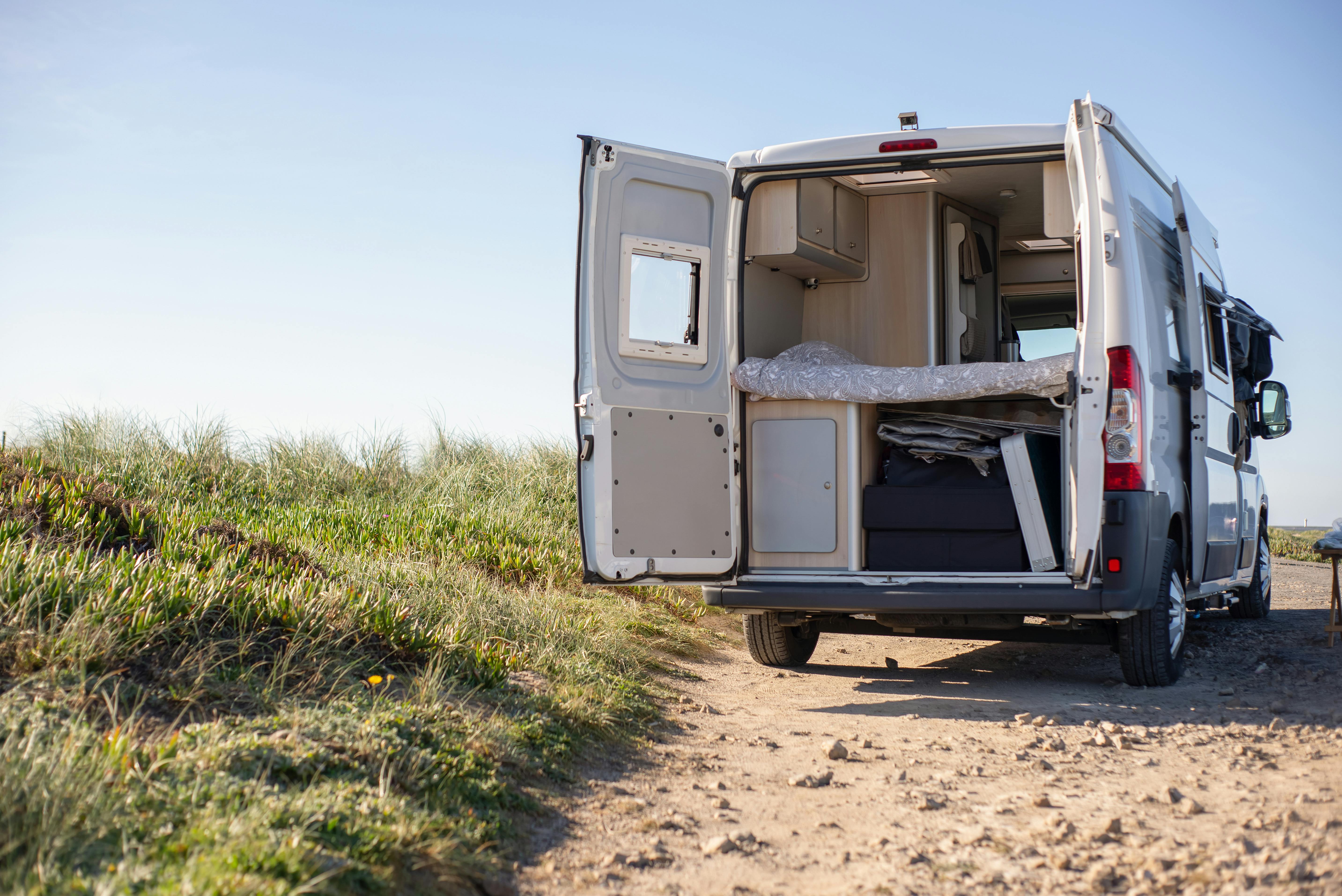
Pop open the back doors of a cargo van camper and you will see all kinds of different layouts. Here are the main things to pay attention to.
Sleeping Setup
Most vans have either a fixed bed or a convertible setup. A fixed bed is exactly what it sounds like. The bed stays in place all the time. This is simple and comfortable, but it takes up space even when you are not sleeping.
Convertible setups let you transform the seating area into a bed at night, then fold it back during the day to free up space. Clever, but it gets annoying having to make and unmake your bed every single day.
Kitchen Area
At minimum, you want a small sink and a cooktop. A fridge is nearly a must-have unless you are okay living out of coolers. Counter space is gold in a van, so pay attention to how much room you have to actually prep food.
Check the water capacity too. Some vans have 10-gallon systems, others have 30 gallons or more. More water means fewer fill-ups, but also more weight.
Electrical System
This is where a lot of beginners get confused. How much power do you need? That depends on what you want to run. Lights and phone charging? A small battery bank works fine. Running a fridge, a laptop, and maybe a fan? You need more juice.
Look for vans with solar panels and a good battery setup. Lithium batteries cost more upfront but last longer and work better than traditional lead-acid batteries. A 200 to 400 watt solar system gives you enough power for basic needs without having to plug in every night.
Storage Space
You need somewhere to put your clothes, food, gear, and all the random stuff that accumulates on a road trip. Good van conversions have clever storage solutions built into every available nook. Under the bed, overhead cabinets, slide-out drawers. The more organized storage you have, the less cluttered and chaotic your van life becomes.
Ventilation
This is something people forget about until they wake up in a puddle of condensation. You need airflow. Most quality conversions include at least one roof vent fan. This pulls hot air out in summer and reduces moisture buildup year-round. Windows that actually open help too.
Gas Versus Diesel: The Fuel Debate
Cargo vans come with either gasoline or diesel engines. Each has pros and cons.
Gas Engines
Gas engines are cheaper to maintain and repair. Any mechanic can work on them. Parts are readily available. They are quieter and smoother. But they typically get worse fuel economy than diesel, especially when the van is fully loaded.
If you plan to mostly do weekend trips and shorter adventures, a gas van makes plenty of sense. The cost savings on maintenance often outweigh the extra fuel expense.
Diesel Engines
Diesel engines last longer, get better mileage, and have more torque for hauling heavy loads or climbing mountains. The downside? They cost more upfront, repairs are more expensive, and diesel fuel can be harder to find in some areas.
Serious van lifers who rack up 30,000 miles a year often prefer diesel for the longevity and efficiency. But for casual camping, gas works just fine.
Test Drive Before You Buy
Never, ever buy a cargo van camper without driving it first. These vehicles handle differently than a regular car. They are taller, longer, and heavier. You need to make sure you feel comfortable behind the wheel.
Pay attention to blind spots. Cargo vans have big ones. Check how the steering feels, how the brakes respond, and how much body roll you get going around corners. If the van has a lot of miles, listen for weird noises or vibrations that might signal mechanical problems.
Take it on the highway and see how it handles at speed. Does it feel stable or does the wind push you around? The last thing you want is to buy a van and then realize you hate driving it.
Where You Will Actually Camp
Here is something to consider that goes beyond the van itself. Where do you plan to camp? If you mostly stay at established campgrounds like RV site rentals, you will have hookups for water and electricity. Your van does not need to be as self-sufficient.
But if you want to camp off-grid, park at trailheads, or boondock in the middle of nowhere, you need more battery capacity, more water storage, and systems that can keep you comfortable without outside help.
Some campers split the difference by having a home base at seasonal RV sites where they can plug in and restock, then take off for a few days at a time to more remote spots.
Common Mistakes First-Time Buyers Make
Let us save you some headaches by pointing out what trips people up.
Buying Too Much Van
Bigger is not always better. If you buy a huge van with every bell and whistle but you only camp three weekends a year, you overspent. Be honest about how you will actually use it.
Forgetting About Insurance and Registration
Converted vans can be tricky to insure. Some companies treat them like RVs, others like regular cargo vans. Get insurance quotes before you buy so there are no surprises.
Not Thinking About Resale
Your needs might change. Maybe you love van life and want to upgrade in a few years. Maybe you decide it is not for you. Either way, some vans hold their value way better than others. Stick with popular van models and quality conversions if you want to get a decent price when you sell.
Skipping the Pre-Purchase Inspection
If you are buying used, pay a mechanic to look it over. A few hundred dollars now can save you thousands in repairs later. Check the frame for rust, the engine for leaks, and the conversion for water damage.
Maintaining Your Cargo Van Camper
Once you own your van, take care of it. Regular oil changes, tire rotations, and brake checks keep the mechanical side running smooth. On the conversion side, keep an eye out for leaks, check your battery health, and make sure all your connections stay tight.
Wash the exterior regularly, especially the undercarriage if you drive on salted winter roads. Treat any rust spots immediately before they spread. Keep the interior clean and dry to prevent mold and mildew.
A well-maintained cargo van camper can last for hundreds of thousands of miles. Treat it right and it will take you on adventures for years to come.
Ready to Start Your Van Life Journey?
Choosing your first cargo van camper is a big decision, but now you know what to look for. Think about size, roof height, fuel type, and how the interior is set up. Test drive everything. Do your research. And most importantly, be honest about what you actually need versus what looks cool on social media.
When you are ready to take your new van on its first real adventure, Willowemoc Campgrounds is waiting for you. Nestled in the beautiful Catskills at 30 Willowemoc Rd in Livingston Manor, NY, we offer the perfect setting for van campers, RV enthusiasts, and everyone in between. Whether you need a spot for a weekend getaway or want to settle in for the season, we have got the facilities and natural beauty to make your trip memorable.
Ready to plan your next camping adventure? Visit Willowemoc Campgrounds to book your stay today. Bring your new cargo van camper and discover why our guests keep coming back season after season!